Water quality plays a crucial role in maintaining good health, and one important factor used to measure it is TDS (Total Dissolved Solids). TDS indicates the amount of dissolved substances such as minerals, salts, and impurities present in drinking water. While some dissolved minerals are essential for the body, excessive TDS levels can affect the taste and safety of water. Understanding TDS helps in determining whether your drinking water is suitable for daily consumption and whether purification is required.
In this blog, we will explain what TDS is, why it matters, the ideal TDS levels for drinking water, and how maintaining the right balance supports better health.
What is TDS in Drinking Water?
TDS (Total Dissolved Solids) in drinking water refers to the total amount of dissolved substances such as minerals, salts, metals, and organic matter present in water. These substances are usually invisible and can affect the taste, quality, and safety of water.
TDS is measured in ppm (parts per million). A moderate TDS level is considered safe and even beneficial because it contains essential minerals like calcium and magnesium. However, very high TDS levels may indicate contamination and can affect water taste and health.
Generally, drinking water with a TDS level between 50–150 ppm is considered good, while levels above 500 ppm may require purification.
- Calcium
- Magnesium
- Potassium
- Sodium
- Bicarbonates
- Chlorides
- Sulfates
TDS is measured in milligrams per liter (mg/L) or parts per million (ppm). For example, if water has 100 ppm TDS, it means that 100 milligrams of dissolved solids are present in one liter of water.
These dissolved solids can come from natural sources such as rocks and soil, or from human activities like industrial discharge, agriculture, and water treatment processes.
Why is TDS Important for Your Health?
TDS affects three major aspects of drinking water:
1. Mineral Content
Some dissolved minerals, such as calcium and magnesium, are beneficial for the body. They contribute to bone strength, muscle function, and overall health. Water with very low TDS may lack these essential minerals.
2. Taste of Water
TDS significantly influences the taste of water.
- Very low TDS water may taste flat or bland.
- Very high TDS water may taste salty, bitter, or metallic.
Balanced TDS levels usually provide fresh and pleasant-tasting water.
3. Safety and Quality
High TDS levels may indicate the presence of excessive salts or unwanted contaminants. While TDS itself does not identify specific harmful substances, extremely high levels can signal the need for proper water treatment.
Ideal TDS Levels for Drinking Water
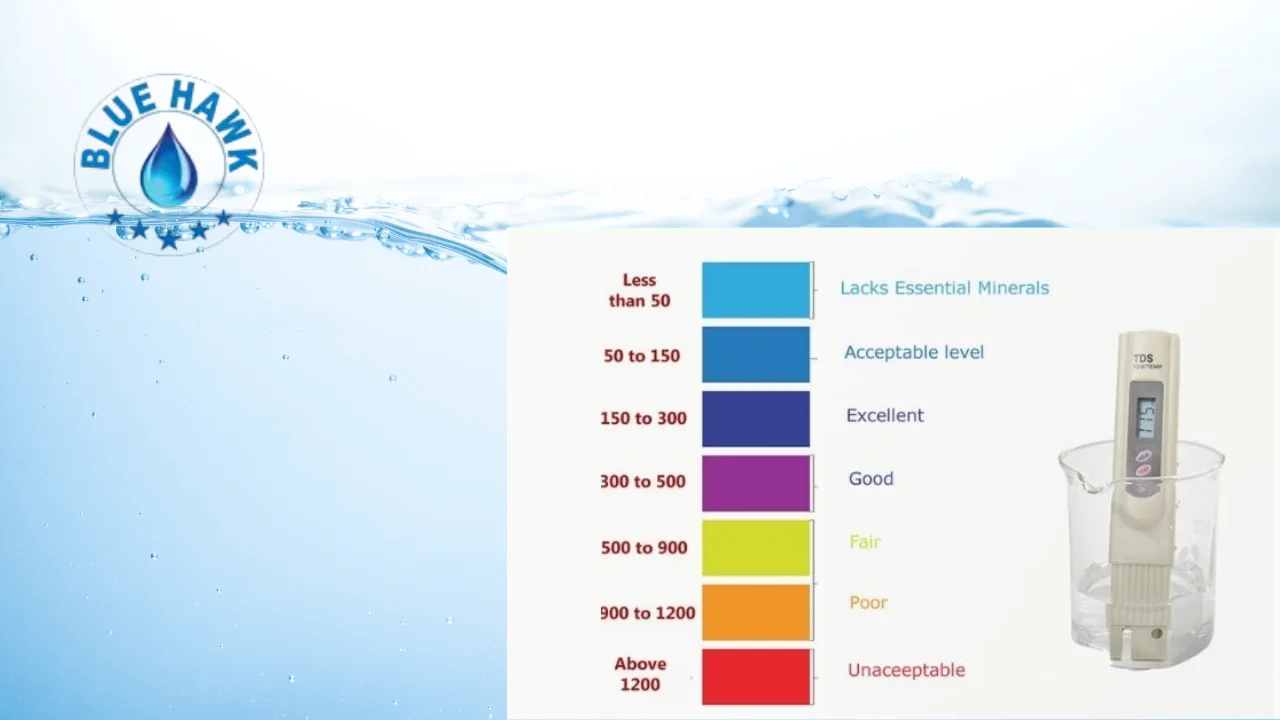
Maintaining the correct TDS level is important for both safety and health. Below is a general classification of best TDS for drinking water:
Below 50 ppm
- Very low mineral content
- May lack essential minerals
- Taste may feel flat
Water in this range is usually produced by advanced purification systems like RO without mineral balancing.
50–150 ppm (Ideal Range)
- Considered excellent for drinking
- Balanced mineral content
- Fresh and pleasant taste
This range is often regarded as the best TDS level for daily consumption because it provides essential minerals without excess dissolved solids.
The minimum recommended TDS (Total Dissolved Solids) level for drinking water is generally around 50 ppm (parts per million).
150–300 ppm
- Good and safe for drinking
- Slightly higher mineral content
- Acceptable taste
Water in this range is still healthy and commonly found in many natural water sources.
300–500 ppm
- Acceptable but not ideal
- May taste slightly heavy
- Suitable if properly treated
Above 500 ppm
- Not recommended for regular consumption
- May indicate high salt concentration
- Requires proper water treatment
For most households, the recommended TDS level for drinking water lies between 50 and 300 ppm, with 50–150 ppm being the most preferred range.
Effects of Very Low TDS Water
Water with extremely low TDS (below 50 ppm) may not be harmful in the short term, but long-term consumption may not provide sufficient essential minerals. It may also taste unnatural or flat.
Many modern purification systems remove almost all dissolved solids. While this ensures safety from contaminants, it is important to reintroduce essential minerals to maintain healthy water quality.
Effects of High TDS Water
High TDS levels can cause:
- Salty or bitter taste
- Scale formation in appliances
- Possible digestive discomfort in some cases
- Risk of consuming excessive salts
Although high TDS does not always mean the water is unsafe, it is generally advisable to reduce TDS to a safer level through proper treatment methods.
How to Measure TDS in Water
TDS levels can be easily measured using a digital TDS meter. These devices are simple to use and provide instant readings in ppm. Regular testing helps ensure that your drinking water remains within the recommended range.
If you notice sudden changes in TDS levels, it may indicate issues with your water source or purification system.
Maintaining Ideal TDS Levels
Maintaining balanced TDS levels requires proper water treatment solutions. Common methods include:
- Reverse Osmosis (RO) systems
- UV purification
- UF filtration
- Mineral cartridges for balancing
It is important to choose a system that not only purifies water but also maintains essential minerals.
Importance of Professional Water Treatment
Every region has different water quality conditions. Groundwater may have high TDS due to dissolved salts and minerals, while municipal water may require additional purification.
Professional water treatment experts can analyze your water quality and recommend suitable solutions to maintain ideal TDS levels for drinking.
At Yash Water Private Ltd., we understand the importance of balanced and healthy drinking water. Our advanced water treatment systems, commercial ro plant, industrial ro plant are designed to maintain the right TDS levels while ensuring complete purification. We focus on delivering water solutions that are safe, mineral-balanced, and suitable for long-term consumption in homes, industries, and commercial establishments.
Conclusion
TDS is a crucial parameter in determining drinking water quality. While minerals are essential for good health, maintaining the right balance is equally important. Water with too low TDS may lack necessary minerals, while water with very high TDS may contain excessive dissolved solids that affect taste and safety.
For daily drinking purposes, the ideal TDS range is generally 50 to 300 ppm, with 50 to 150 ppm being the most suitable for health and taste.
Regular monitoring and proper water treatment ensure that you and your family consume safe, healthy, and balanced water every day. With expert solutions from Yash Water Private Ltd., you can achieve the perfect balance of purity and mineral content, supporting better health and improved quality of life.